433 N 4th St #210, Montebello, CA 90640, United States
 (323) 888-1030



Raising a child who feels comfortable at the dentist does not happen by accident. It is the result of early visits, gentle communication, and a dental team that understands how children think and react. For parents in Montebello, finding that kind of care close to home makes a real difference in whether dental checkups become a source of dread or simply a normal part of growing up.
Pediatric dentistry is its own discipline for good reason. Children's mouths change constantly, from the eruption of the first baby tooth through the arrival of permanent molars in the early teen years. Each stage carries different risks, from early childhood cavities to orthodontic concerns to the habits that shape a child's long-term oral health. Understanding what to expect at each phase helps parents make informed decisions instead of reacting to problems after they appear.
This guide walks through what pediatric dental care actually involves, when to start, what a typical visit looks like, and how small preventive steps now can save your child from bigger dental work later. Whether you are preparing for your toddler's first appointment or trying to get a reluctant ten-year-old through a cleaning, the information below should help you feel more prepared.
When Your Child Should Have Their First Dental Visit
The American Academy of Pediatric Dentistry recommends scheduling a child's first dental appointment by their first birthday, or within six months of the first tooth coming in. That timeline often surprises parents who assume dental visits should wait until a child has a full set of teeth or can sit still on their own. In reality, early visits are less about treatment and more about prevention, monitoring, and getting your child used to the environment.
An early exam lets our team check how teeth are erupting, look for early signs of decay, and talk with you about feeding habits, pacifier use, and teething discomfort. It is also a chance for parents to ask questions before small issues become bigger ones. Our guide to your child's first exam covers exactly what that initial appointment looks like, so there are no surprises for you or your little one.
Starting early also establishes a dental home. Children who see the same practice regularly from a young age tend to build familiarity and trust with the team, which pays off significantly later when more involved care, like fillings or sealants, becomes necessary. Waiting until a toothache or visible cavity forces the issue often means the first visit is also the first uncomfortable experience, which can set the tone for years of anxiety.
What Happens During a Pediatric Dental Checkup
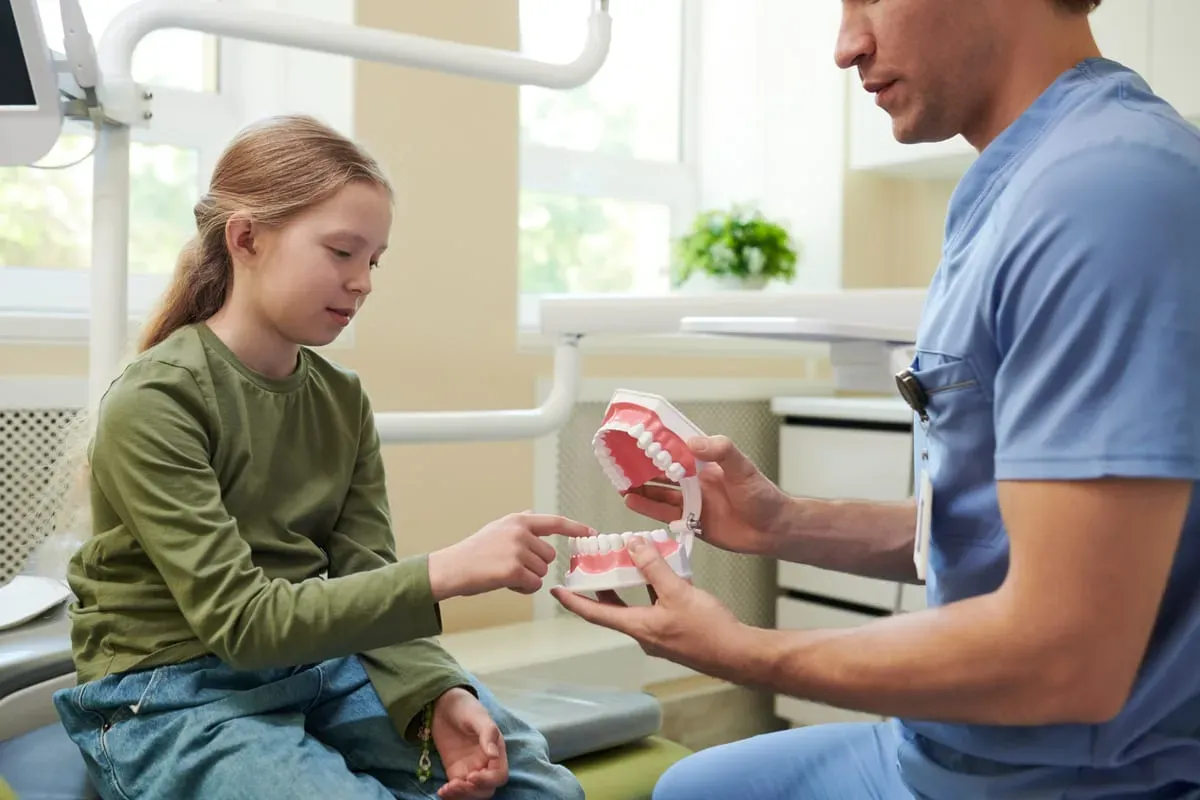
A pediatric checkup is structured differently from an adult appointment, both in pacing and in how information is communicated. Our team explains each step in simple, non-scary language, often letting children see and touch tools before they are used. This "tell-show-do" approach reduces fear of the unknown, which is usually the biggest source of dental anxiety in young patients.
A typical visit includes a gentle examination of the teeth, gums, and bite, along with a professional cleaning to remove plaque buildup that brushing alone may have missed. Depending on age and risk factors, the dentist may also recommend fluoride treatments to strengthen enamel or discuss whether dental sealants would help protect molars from decay. X-rays are used sparingly and only when necessary, typically to check for cavities between teeth that are not visible during a visual exam or to monitor how permanent teeth are developing underneath baby teeth.
What a Visit Typically Includes
- A full oral exam: checking tooth development, bite alignment, and early signs of decay or gum irritation.
- Professional cleaning: removing plaque and tartar in areas that are tough for kids to reach with a toothbrush.
- Preventive treatments: fluoride applications or sealants applied to back teeth where cavities are most common.
- Parent education: guidance on brushing technique, diet, thumb-sucking, and pacifier habits specific to your child's age.
- A plan for what's next: a timeline for follow-up visits and any treatment that may be needed down the road.
Preventing Cavities in Baby and Permanent Teeth
Tooth decay is the most common chronic condition in children nationwide, and it is also one of the most preventable. Baby teeth matter more than many parents realize. They hold space for permanent teeth, support proper chewing and speech development, and influence how a child's jaw and bite develop over time. Losing a baby tooth too early because of decay can cause neighboring teeth to shift, creating alignment problems later.
Diet plays a large role in cavity risk. Frequent snacking on sticky or sugary foods, juice sipped throughout the day, and bottles taken to bed all increase the amount of time sugar sits on teeth, feeding the bacteria that cause decay. We often recommend limiting grazing between meals and rinsing with water after sugary snacks when brushing is not immediately possible.
For deeper protection, dental sealants are one of the most effective preventive tools available for children. These thin protective coatings are applied to the chewing surfaces of molars, where deep grooves can trap food and bacteria that a toothbrush cannot fully clean. Sealants can reduce the risk of decay in those teeth by a significant margin and typically last several years with normal wear. If a cavity does form despite preventive care, early treatment with tooth-colored fillings keeps the process quick, comfortable, and far less invasive than waiting until the decay spreads.
Helping a Nervous Child Feel Comfortable in the Chair
It is normal for children to feel unsure about the dentist, especially at a young age or after a bad experience elsewhere. A pediatric-focused approach addresses this directly rather than treating it as an obstacle to work around. The pacing of the appointment, the tone of voice used, and even the way instruments are introduced all factor into whether a child leaves the visit feeling fine or feeling frightened.
One of the most effective strategies is simply giving children a sense of control. Letting them hold a mirror, choose the flavor of fluoride, or signal with a raised hand if they need a short break gives them agency in a situation that otherwise feels entirely out of their hands. Positive reinforcement, like praise for sitting still or being brave, reinforces good behavior without making the visit feel like a test.
Parents play a role here too. Children often take emotional cues from the adults around them, so staying calm and speaking about the visit in neutral or positive terms beforehand helps far more than over-explaining or over-apologizing. Avoid words like "hurt" or "pain" when describing what to expect, and instead focus on the visit being quick, routine, and nothing to worry about.
Dental Milestones from Toddler to Teen
A child's dental needs shift noticeably as they grow, and understanding these stages helps parents anticipate what is coming rather than being caught off guard. Toddlers are primarily focused on getting through teething and establishing a brushing routine. By the time a child reaches school age, their mouth usually contains a mix of baby and permanent teeth, and cavity prevention becomes a bigger priority as molars erupt.
Preteens and early teens often need closer monitoring for bite and alignment issues, since this is typically when orthodontic concerns, such as crowding or an uneven bite, become more apparent. It is also a period when kids participate more in contact sports, which makes sports mouthguards an important consideration for protecting both baby and permanent teeth from injury during practices and games.
Older teens approaching adulthood may need evaluation for wisdom teeth, and any lingering issues with crowded or crooked teeth are often addressed around this time as well. Keeping consistent checkups through each of these stages means problems are caught early, when they are smaller, less expensive, and far less disruptive to treat.
Building Good Habits at Home
What happens between dental visits matters just as much as the care provided in our office. Establishing a consistent brushing and flossing routine early, and sticking with it, is the single biggest factor in a child's long-term oral health. Most children need help brushing effectively until around age seven or eight, so parental involvement is not optional at younger ages, it is essential.
Beyond brushing, modeling good habits yourself goes a long way. Children notice when parents treat dental care as routine and important rather than optional. Scheduling family checkups around the same time, talking positively about dental visits, and avoiding using them as a threat or punishment all shape how a child feels about oral health long-term.
Regular visits every six months remain the backbone of good home care. Even with excellent brushing habits, professional cleanings and exams catch issues that are impossible to see or feel at home, from small cavities forming between teeth to early bite misalignment. Pairing solid home habits with consistent professional checkups gives your child the best chance at a cavity-free, confident smile.
Key Takeaways
- Schedule your child's first dental visit by age one, or within six months of the first tooth appearing.
- Pediatric checkups focus on gentle pacing, education, and preventive care like fluoride and sealants.
- Baby teeth matter for speech, chewing, and guiding permanent teeth into place, so cavities should never be ignored.
- Letting children feel some control during visits reduces dental anxiety significantly over time.
- Consistent home brushing routines combined with six-month checkups give children the strongest defense against decay.
Frequently Asked Questions
At what age should baby teeth start coming in, and when should I worry if they haven't?
Most babies get their first tooth between four and seven months, though some healthy children see their first tooth closer to a year. If your child has no teeth by their first birthday, it is worth mentioning at their checkup, but it is not usually a sign of a serious problem on its own.
Do baby teeth really need fillings if they are going to fall out anyway?
Yes. Untreated decay in baby teeth can cause pain, infection, and early tooth loss, which affects chewing, speech, and the spacing needed for permanent teeth. Treating cavities promptly keeps a small issue from becoming a bigger, more painful one.
How often should my child see the dentist?
Most children should visit every six months, just like adults, unless we recommend a different schedule based on their individual cavity risk or orthodontic needs. Consistent visits make it easier to catch small problems before they require more extensive treatment.
My child is terrified of the dentist. What can we do?
Tell our team in advance so we can adjust the pace and approach of the visit accordingly. Short, positive appointments, clear explanations in kid-friendly language, and praise for small successes usually help children build confidence over a few visits.
Are dental X-rays safe for children?
Yes. Modern digital X-rays use very low levels of radiation and are only taken when they provide information that cannot be gathered through a visual exam alone, such as checking for decay between teeth or monitoring permanent teeth developing below the gumline.
Giving Your Child a Strong Dental Foundation
Good pediatric dental care is less about any single appointment and more about the pattern it creates over years. A child who visits the dentist early, consistently, and in an environment built around their comfort is far more likely to grow into an adult who takes oral health seriously without fear or avoidance attached to it. That outcome is worth prioritizing from the very first tooth.
If your child is due for a checkup, has never seen a dentist, or has been putting off a visit because of past anxiety, our Montebello team is ready to make the experience a positive one. Every step, from the first exam to ongoing preventive care, is designed around helping kids feel safe while protecting their smiles for the long run.