Dental Implants
Common Questions About Dental Implants Answered
We answer the questions Montebello patients ask most often about dental implants, covering cost, procedure steps, recovery time, and long-term care.
Replace missing teeth with a permanent, natural-looking solution built to last a lifetime of smiles.
A missing tooth is never just a cosmetic issue. It changes how you chew, how your remaining teeth shift over time, and how your jawbone holds its shape. At Sahara Family Dental, we place dental implants as part of our broader oral surgery services, giving patients throughout Montebello a tooth replacement option that functions, feels, and looks like the real thing.
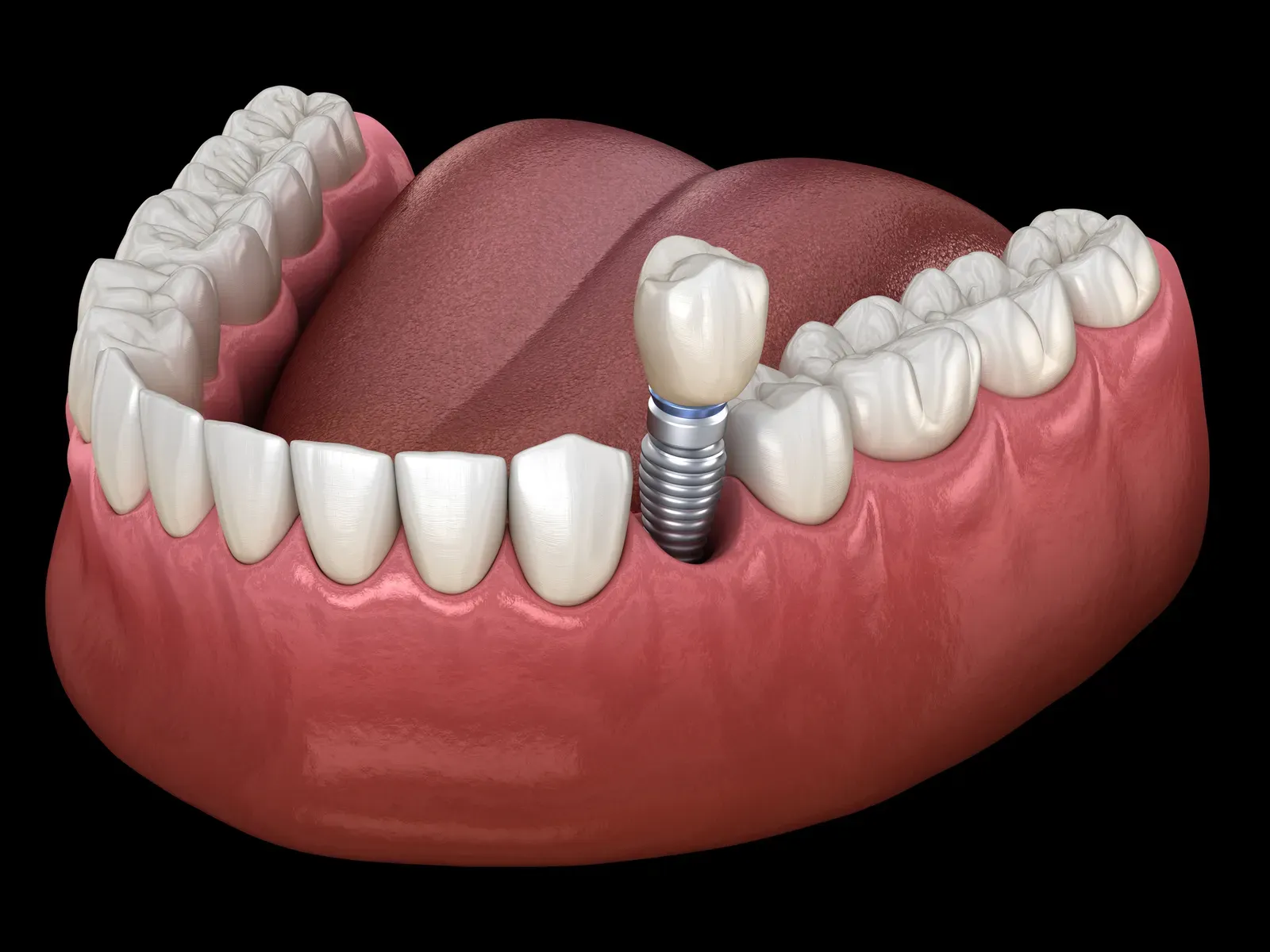
A dental implant is a small titanium post that we position directly into the jawbone where a tooth root used to be. Over several months, the bone fuses to the post through a process called osseointegration, creating an anchor that is as stable as a natural tooth root. Once healed, that post supports a custom-made crown, bridge, or denture, giving you back full biting force without relying on the surrounding teeth for support, the way a traditional bridge would.
Unlike removable dentures that can slip or require adhesives, implants stay put. They do not need to be taken out at night, soaked, or replaced every few years. For patients who have lost one tooth, several teeth, or an entire arch, implants represent the closest thing modern dentistry offers to growing a new tooth.
Many patients live with a gap or a failing tooth longer than they should, assuming there is no good fix available or that treatment will be too complicated. In reality, the warning signs are usually clear once you know what to look for, and addressing them early keeps the surrounding bone and teeth healthier.
Most healthy adults missing one or more teeth are reasonable candidates for implants, but a thorough evaluation at our Montebello office is the only way to confirm it for your specific situation. We review your jawbone density, gum health, bite, and overall medical history before recommending a treatment plan, since implants depend on a solid foundation to succeed long-term.
If bone volume has diminished after years without a tooth, that does not automatically rule out implants. Bone grafting procedures, which we also perform as part of our oral surgery services, can rebuild the foundation needed to support an implant safely and predictably.
Not every patient needs the same solution. The right approach depends on how many teeth are missing, where they are located, and the condition of your jawbone. During your consultation, we walk through each option in detail so you understand exactly what the procedure involves and why it fits your case.
The benefits of implants go well beyond appearance. Because they replace the tooth root itself, implants address the underlying structural changes that happen after tooth loss, something that bridges and dentures alone cannot do. Patients who choose implants often tell us they forget they even have one, which is exactly the goal.
Healing after implant placement happens in phases, and most patients return to normal daily activities within a few days of surgery. The more involved healing, osseointegration, takes several months, during which the bone fuses securely to the implant post before we attach the final crown or restoration.
We give every patient detailed, personalized aftercare instructions, but the following guidelines apply broadly to supporting a smooth, successful recovery.
We start with a complete exam, including digital X-rays or a 3D scan, to assess your bone density, gum health, and bite. This gives us an accurate picture of whether you need a bone graft or can proceed directly to implant placement.
Using your scans, we map out the exact position, angle, and depth for each implant to maximize stability and ensure the final restoration fits naturally with your bite and smile.
Under local anesthesia, we place the titanium post into the jawbone. Most patients describe the procedure as comparable to a tooth extraction, with manageable discomfort afterward.
Over the following months, the bone naturally grows around the implant, locking it firmly into place. We check in periodically to confirm healing is progressing as expected.
Once healing is complete, we attach a connector piece called an abutment and place your custom crown, bridge, or denture, finishing the process with a tooth that matches your natural smile.
Placing and restoring dental implants takes precision, planning, and a genuine understanding of how the whole mouth works together. Our team treats implant dentistry as part of a larger oral surgery discipline, which means your plan accounts for your bite, bone structure, and long-term oral health, not just the gap you came in to fill.
Timelines vary by patient, but the full process typically runs three to eight months. Healing and osseointegration, when the bone fuses to the implant, usually takes three to six months, followed by placement of your final crown or restoration. Patients who need a bone graft beforehand may add a few extra months to allow that site to heal fully before implant placement.
The placement procedure itself is performed under local anesthesia, so you should not feel pain during surgery. Most patients report mild to moderate soreness and swelling for two to three days afterward, comparable to recovering from a tooth extraction, and this is managed well with over-the-counter pain medication and cold compresses.
Cost depends on how many implants you need, whether bone grafting is required, and the type of final restoration. During your consultation, we provide a detailed, itemized estimate. Many dental insurance plans cover a portion of implant treatment, and our team is happy to help you review your benefits and discuss financing options.
Age alone rarely disqualifies a patient from getting implants; we have successfully treated patients well into their seventies and eighties. What matters more is overall health and bone quality, which is why we perform a thorough evaluation for every patient before recommending treatment.
Caring for an implant is straightforward: brush twice a day, floss daily around the crown, and keep up with regular dental checkups and cleanings. While the implant itself cannot develop decay, the surrounding gum tissue needs the same attention as your natural teeth to stay healthy long-term.
If a scan shows insufficient bone density, we can typically perform a bone grafting procedure to rebuild the site. Once the graft has healed and integrated, the area is generally strong enough to support a stable, long-lasting implant.
Schedule your dental implant consultation at Sahara Family Dental in Montebello and take the first step toward a stable, natural-looking smile that lasts.
Your Smile Awaits
Schedule your visit with Sahara Family Dental today and experience gentle, modern care for your whole family.