433 N 4th St #210, Montebello, CA 90640, United States
 (323) 888-1030




Losing a tooth, or facing the prospect of losing one, brings up a lot of questions fast. Will it hurt? What will it cost? Will it actually look and feel like a real tooth? If you've been searching for answers, you're not alone. Dental implants are one of the most asked-about treatments we discuss with patients at our Montebello office, and for good reason. They are the closest thing modern dentistry offers to replacing a natural tooth, root and all.
But because implants involve a surgical component, a healing period, and a meaningful investment, patients understandably want clear, honest information before they commit. Misinformation online doesn't help. Some sources make implants sound painless and instant; others make the process sound far more complicated than it typically is. The truth sits comfortably in between, and it's worth understanding in detail.
This guide walks through the questions we hear most often from patients considering dental implants in Montebello, from how the procedure actually works to what recovery really feels like and how to know if you're a good candidate. Our goal is to give you a realistic, practical picture so you can make a confident decision about your smile.
How Dental Implants Actually Work
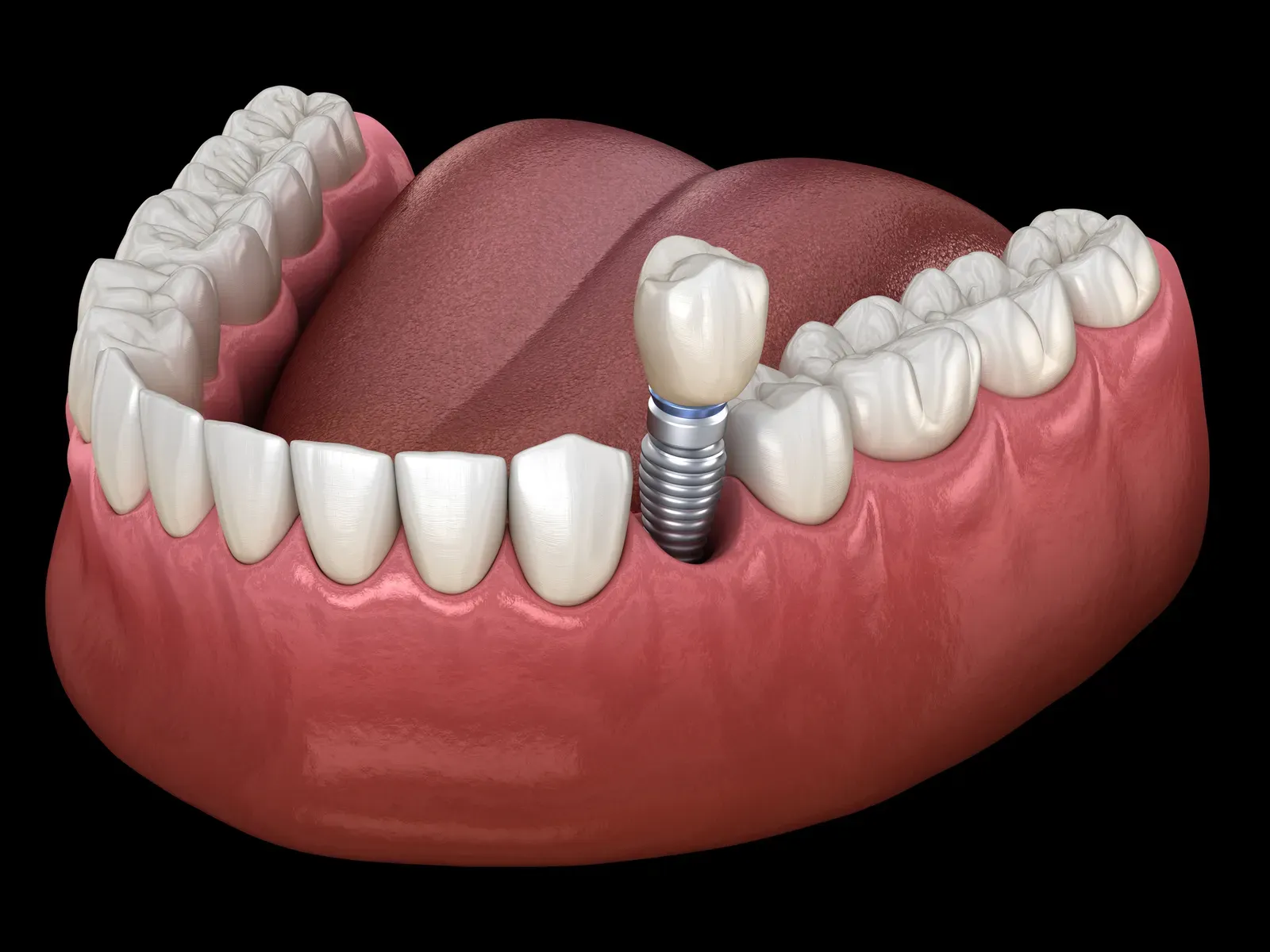
A dental implant is made of three parts: a titanium post that acts as an artificial tooth root, an abutment that connects the post to the visible tooth, and a custom crown that sits on top. The titanium post is placed directly into the jawbone during a minor surgical procedure. Over the following weeks, the bone grows around the post in a process called osseointegration, locking it into place much the way your natural tooth root was anchored.
This is the key difference between implants and other tooth replacement options like bridges or removable dentures. A dental bridge relies on neighboring teeth for support, and traditional dentures sit on the gum tissue without any root structure underneath. An implant replaces what's actually missing below the gumline, which is why it tends to feel and function more like a real tooth, with no slipping, no clicking, and no pressure on adjacent teeth.
Once the implant has fully integrated with the bone, we attach the abutment and finish with a crown that's shaded and shaped to match your surrounding teeth. For patients missing multiple teeth or an entire arch, implants can also anchor a full bridge or implant-supported dentures, giving a stable, non-removable alternative to conventional dentures.
Am I a Good Candidate for Implants?
Most healthy adults who have lost one or more teeth are reasonable candidates for implants, but a few factors matter more than age. The single biggest consideration is bone density in the jaw. Because the implant post needs enough solid bone to anchor into, patients who have lost a tooth years ago and experienced bone resorption may need a bone graft before implant placement is possible. This isn't unusual, and it doesn't disqualify most patients, it just adds a step to the timeline.
Gum health is the other major factor. Active, untreated gum disease needs to be addressed first, since implants placed into inflamed or infected tissue have a much higher failure rate. This is one reason we always start with a thorough evaluation, and sometimes a course of scaling and root planing or broader gum disease treatment, before moving forward with surgery.
Other Factors We Consider
- Jawbone volume: Adequate bone density is needed to support the implant post securely over time.
- Overall health: Conditions like uncontrolled diabetes can slow healing, so we review your medical history carefully first.
- Smoking habits: Tobacco use significantly raises the risk of implant failure by restricting blood flow to healing tissue.
- Gum tissue health: Healthy, disease-free gums give the implant the best foundation to integrate successfully.
What Does the Treatment Timeline Look Like?
One of the most common misconceptions is that implants are a single visit. In reality, the process typically unfolds over three to six months, sometimes longer if bone grafting is needed. That sounds like a long time, but most of it is passive healing, not chair time. You'll have a handful of appointments spread across that window rather than ongoing treatment.
The process generally starts with a consultation and imaging to map out your jawbone and plan the exact placement of the implant. Surgical placement follows, done under local anesthesia (and sedation if preferred), and for many patients this appointment is quicker and more comfortable than expected. Then comes the healing phase, usually three to six months, during which the bone fuses with the titanium post. Once integration is confirmed, we attach the abutment and take impressions for your final crown, which is placed a few weeks later.
If a tooth needs to come out before implant placement, that extraction is sometimes done at the same visit, and in select cases we can place the implant immediately afterward. Patients who've had a tooth removed through tooth extractions elsewhere often come to us specifically to discuss implant timing, and we're happy to review your specific situation and lay out a realistic schedule during your first visit.
What Should I Expect During Recovery?
Recovery from implant surgery is generally more manageable than patients anticipate. Most people experience mild to moderate swelling and soreness for two to three days, comparable to what you'd feel after a tooth extraction. Over-the-counter pain relievers are usually sufficient, though we'll prescribe something stronger if needed for the first day or two.
Soft foods are recommended for the first week, with a gradual return to your normal diet as the surgical site settles. Most patients are back to work and regular routines within two to three days, though strenuous exercise should wait about a week to avoid disrupting the healing site. The longer healing process, the bone fusing around the implant, happens quietly in the background and doesn't require any special care beyond good oral hygiene and attending your follow-up appointments.
It's worth noting that discomfort tends to peak within the first 48 hours and improves steadily from there. If you ever experience worsening pain, persistent swelling, or signs of infection beyond the first few days, contact us right away. While rare, prompt attention to any complication is the best way to protect your investment and keep healing on track.
How Much Do Implants Cost and Does Insurance Help?
Cost is usually the question patients care most about, and understandably so. A single implant, including the post, abutment, and crown, typically represents a larger upfront investment than a bridge or denture. The exact price depends on factors like whether a bone graft is needed, the material used for the crown, and how many teeth are being replaced. We always provide a detailed, itemized estimate before any treatment begins, so there are no surprises.
Dental insurance coverage for implants varies widely. Some plans cover a portion of the procedure, particularly the crown or certain diagnostic steps, while others classify implants as elective and offer limited or no coverage. We work directly with your insurance provider to clarify your benefits and will walk you through financing options, including payment plans, that can make treatment more manageable.
It's also worth thinking about cost over time rather than just upfront. Implants are built to last for decades with proper care, while bridges and dentures typically need replacement or adjustment every several years. When you factor in the cost of future repairs or replacements for other options, implants often become more comparable, or even more economical, in the long run.
How Do I Care for an Implant Long-Term?
One of the biggest advantages of implants is how little special care they actually require. You brush and floss them just like your natural teeth, no special adhesives, soaking solutions, or removal routines involved. That said, the gum tissue and bone around the implant still need attention, since a condition called peri-implantitis, a form of gum inflammation around the implant, can develop if plaque is allowed to build up.
Routine dental visits remain important even after your implant has fully healed. We check the stability of the implant, monitor the surrounding gum and bone, and perform professional teeth cleanings to keep the area free of the buildup that a toothbrush alone can't reach. Patients who grind their teeth at night may also benefit from a custom night guard to protect both the implant crown and the natural teeth around it from excess pressure.
With consistent home care and regular checkups, implants have a success rate above 95% and can realistically last a lifetime. The titanium post itself doesn't decay, though the crown on top may eventually need replacement after many years of normal wear, similar to how a natural tooth's enamel wears down over decades of use.
Key Takeaways
- Implants replace the tooth root, not just the crown, giving a more stable and natural-feeling result than bridges or dentures.
- Good candidates need adequate jawbone density and healthy gums; bone grafting or gum treatment can address most obstacles.
- The full process typically spans three to six months, though most of that time is passive healing, not appointments.
- Recovery discomfort is usually mild and resolves within a few days for most patients.
- With routine checkups and daily brushing and flossing, implants can last decades or a lifetime.
Frequently Asked Questions
Does getting a dental implant hurt?
The surgery itself is performed under local anesthesia, so you won't feel pain during placement. Most patients describe post-surgical discomfort as mild, similar to a tooth extraction, and it's typically managed well with over-the-counter pain medication for a few days.
Can I get an implant if I've been missing a tooth for years?
In most cases, yes. If significant bone loss has occurred in the area, we may recommend a bone graft first to rebuild enough structure to support the implant. This adds time to the overall process but doesn't usually prevent treatment altogether.
How is an implant different from a bridge or denture?
A bridge relies on neighboring teeth for support, and removable dentures rest on the gums without a root. An implant is anchored directly into the jawbone, giving it independent support that doesn't rely on or strain adjacent teeth, and it typically offers better long-term stability.
Will my implant look like a natural tooth?
Yes. The final crown is custom shaded and shaped to match your surrounding teeth, so it blends in seamlessly. Most people who don't know you have an implant won't be able to tell by looking.
What happens if I need multiple teeth replaced?
Implants can support a full bridge or implant-supported dentures when several teeth or an entire arch is missing. This gives you fixed, non-removable stability instead of the shifting and discomfort that can come with conventional full dentures.
Making an Informed Decision About Your Smile
Dental implants represent a meaningful commitment of time and resources, which is exactly why clear, straightforward answers matter so much before you begin. The good news is that for most patients, the process is more predictable and manageable than they initially expect, and the result, a stable, natural-feeling tooth that can last for decades, speaks for itself.
Every mouth is different, and the only way to know exactly what your treatment would involve is through a personal evaluation. If you've been weighing your options for a missing tooth or considering implants to replace an aging denture, our Montebello team is ready to walk through your specific situation, answer your remaining questions, and help you decide on the path that's right for your smile.