433 N 4th St #210, Montebello, CA 90640, United States
 (323) 888-1030




You bite down on something and feel a sharp twinge, or your dentist points to a dark spot on an X-ray and starts talking about "restoring" the tooth. The next question is almost always the same: do I need a filling, or do I need a crown? It sounds like a simple choice, but the answer actually depends on a handful of factors most patients never get a clear explanation of - until now.
Both fillings and crowns exist to do the same basic job: stop decay or damage from spreading and give you back a tooth you can chew on without worry. But they're built for different situations, and using the wrong one can mean a restoration that fails early, costs you more in the long run, or simply doesn't hold up to how you actually chew and bite every day.
At Sahara Family Dental in Montebello, we walk every patient through this decision with plain-language explanations and a look at the actual tooth on X-rays or in the chair - not a one-size-fits-all answer. This article breaks down how we decide between a filling and a crown, what each procedure actually involves, and what you can expect for comfort, cost, and longevity either way.
How Decay and Damage Decide the Treatment
The single biggest factor in choosing between a filling and a crown is how much healthy tooth structure remains. A filling works by removing decayed material and packing the resulting space with a durable material that bonds to the tooth. This only works well when enough of the original tooth is still intact to support that filling and hold its shape under the pressure of chewing.
Once decay or a crack has eaten away at a large portion of the tooth - often more than half of the visible crown - a filling no longer has enough of a foundation to anchor to. At that point, the tooth needs a restoration that covers and protects the entire structure above the gumline, which is exactly what a dental crown does. We also factor in whether the tooth has had a root canal, since those teeth tend to become more brittle over time and often need the reinforcement a crown provides.
Location matters too. A small cavity on a front tooth or along a smooth surface often responds well to a filling. A back molar that takes the brunt of your chewing force, especially one with a large cavity between teeth, is much more likely to need a crown simply because of the physical stress it has to withstand every single day.
What a Filling Actually Fixes
A filling is the most common restorative treatment in dentistry, and for good reason - it's conservative, quick, and effective for the vast majority of cavities caught at a reasonable stage. After numbing the area, we remove the decayed portion of the tooth, clean out the cavity, and fill the space with a tooth-colored composite resin that's shaped and polished to match your bite.
Composite fillings bond directly to the tooth, which means they actually add a bit of structural support rather than just occupying space. They also blend in so well with the surrounding enamel that most people can't tell a tooth has been filled unless they're told. This is a major upgrade from the silver amalgam fillings many adults grew up with, which darken over time and stand out against natural teeth.
Signs you likely need a filling, not a crown
- The cavity is small to moderate. Decay confined to one surface or a limited area between teeth usually fits a filling perfectly.
- You caught it early. Cavities found during a routine cleaning, before they cause pain, are almost always treatable with a simple filling.
- There's no visible crack or fracture line. Structural damage to the tooth beyond decay usually pushes treatment toward a crown instead.
- The tooth hasn't had a root canal. Teeth with intact nerves and healthy structure typically only need the decay removed and filled.
When a Crown Becomes Necessary
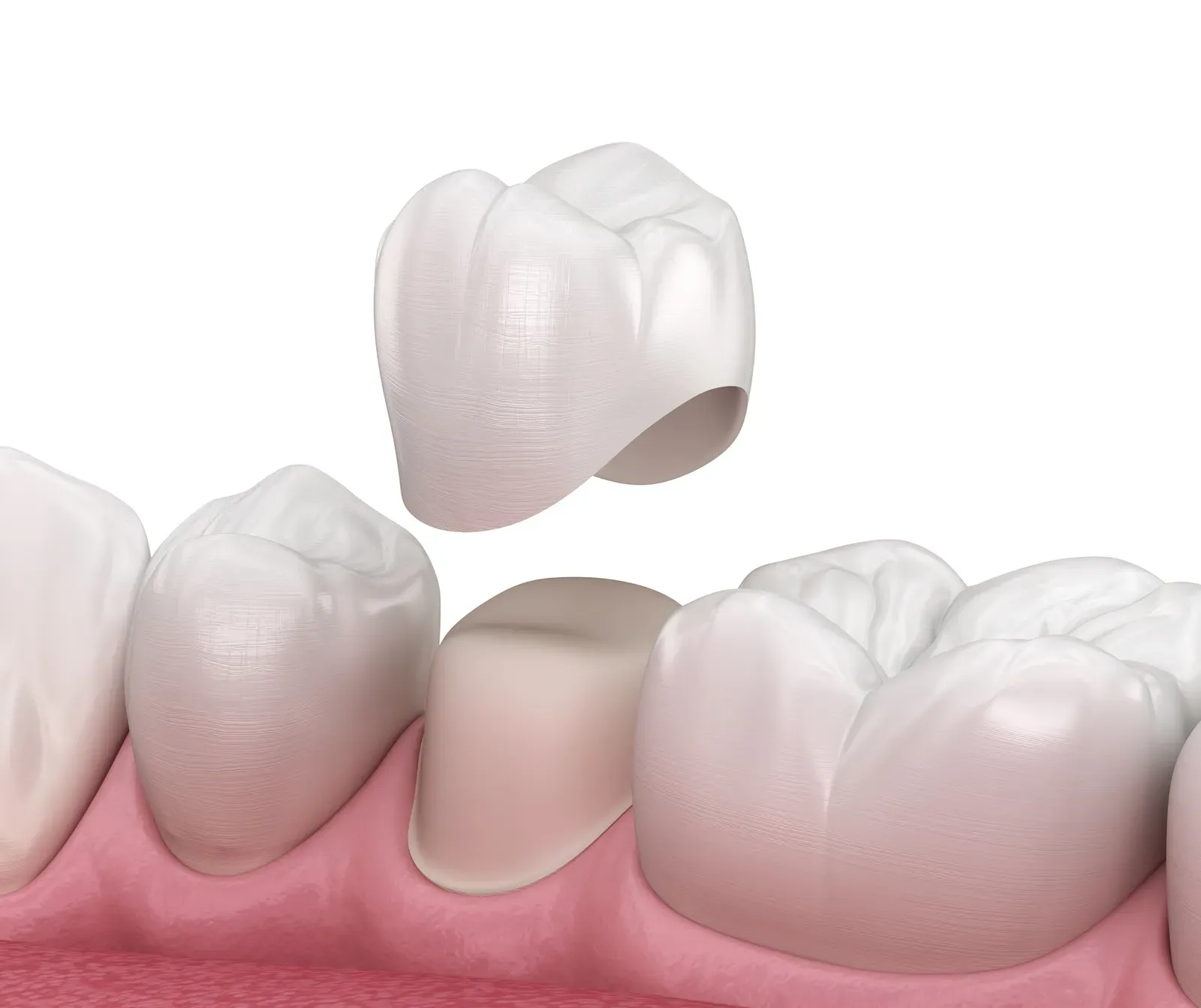
A dental crown is essentially a custom-made cap that fits over the entire visible portion of a tooth, replacing its outer surface entirely. Unlike a filling, which patches a section of the tooth, a crown takes over the job of protecting what's left of the natural structure underneath. We typically recommend a crown when a tooth is too compromised for a filling to hold up long-term.
This comes up most often after a root canal, where the tooth's blood supply has been removed and the remaining structure becomes noticeably more fragile. It also applies to teeth with large, old fillings that have cracked or started to fail, since the tooth around them is often weakened by repeated drilling and refilling over the years. Cracked teeth, teeth broken from trauma, and molars worn down from years of grinding are other common candidates.
Crowns are typically made from porcelain, zirconia, or a combination of both, chosen based on where the tooth sits in your mouth and how much chewing force it needs to handle. Molars often get stronger zirconia crowns for durability, while front teeth get porcelain crowns that are built for a natural, translucent appearance that matches your smile.
The Visit: What to Expect Chairside
A filling is almost always a single-visit procedure. After numbing the tooth, we remove the decay, shape the cavity, apply the composite material in layers, and cure it with a special light before polishing it to a smooth finish. Most patients are in and out within 30 to 60 minutes, and the numbness wears off within a couple of hours.
A crown generally takes two appointments, though some practices offer same-day crowns using in-office milling technology. At the first visit, we numb the area, remove damaged tissue, and reshape the tooth so the crown can fit over it properly. We then take an impression or digital scan, send it to a dental lab, and place a temporary crown to protect the tooth while the permanent one is fabricated - usually over one to two weeks.
At the second visit, we remove the temporary, check the fit and color match of the permanent crown, and cement it in place. We'll also check your bite to make sure the new crown feels comfortable when you chew, adjusting it on the spot if needed. Most patients describe mild sensitivity to temperature for a few days afterward, which typically settles on its own.
Cost and Insurance Considerations
It's natural to want to know the cost difference before committing to a treatment plan, and it's a fair question. Fillings are the less expensive option by a wide margin since they require less material, lab work, and chair time. Crowns cost more because they involve a custom-fabricated restoration, lab fees, and a more involved process overall.
Most dental insurance plans cover both procedures at different reimbursement levels, with fillings typically covered at a higher percentage than crowns. That said, a crown that's genuinely needed to save a tooth is usually far less expensive in the long run than letting a cracked or heavily decayed tooth fail completely, which can lead to extraction and the need for an implant or bridge later on.
We always review your specific insurance benefits and give you a clear, written estimate before any treatment begins, so there are no surprises when the bill arrives. If cost is a concern, we're also happy to talk through phased treatment plans or financing options that make necessary restorative work more manageable.
How Long Each Restoration Lasts
Composite fillings typically last between 7 and 10 years with good oral hygiene, though this varies based on the size of the filling and how much chewing stress that particular tooth absorbs. Fillings on back molars tend to wear faster than those on front teeth simply because of the extra force involved in chewing.
Crowns are built to last longer, typically 10 to 15 years, and many patients get well beyond that with consistent care. Because a crown fully encases the tooth, it distributes chewing forces more evenly and protects the underlying structure from further cracking, which is part of why it's the go-to solution for teeth that have already been significantly weakened.
Either way, the restoration is only as good as the habits around it. Brushing twice a day, flossing daily, and coming in for regular cleanings and checkups lets us catch any wear, staining, or small gaps around a filling or crown long before they turn into bigger problems. We check every existing restoration at your routine visits as a standard part of your exam.
Key Takeaways
- Fillings work best for small to moderate cavities where enough healthy tooth structure remains to support the repair.
- Crowns are needed when a tooth has significant decay, a crack, or has already had a root canal and needs full protection.
- Fillings are typically a single visit; crowns usually require two visits, with a temporary crown in between.
- Crowns generally last longer than fillings, but both depend heavily on good daily oral hygiene and regular checkups.
- The right choice is never guesswork - it's based on an actual exam and X-rays of your specific tooth.
Frequently Asked Questions
Can a cavity turn into something that needs a crown if I wait too long?
Yes. Decay doesn't stop progressing on its own, and a cavity that could have been treated with a simple filling today can grow large enough within months to require a crown instead. This is one of the main reasons routine checkups matter - catching decay early almost always means a smaller, less expensive treatment.
Does getting a crown hurt more than getting a filling?
Both procedures are done under local anesthesia, so you shouldn't feel pain during either one. Some patients report mild soreness or sensitivity to hot and cold for a few days after a crown prep, which is normal and typically resolves on its own without any intervention needed.
Will my insurance cover a crown if a filling would have been cheaper?
Insurance coverage is based on medical necessity, not cost preference, so a crown is covered when it's the appropriate treatment for the condition of the tooth. We document the clinical reasoning and submit any pre-authorization your plan requires so there's no confusion at claim time.
Can a filling be replaced with a crown later if it fails?
Yes, this happens fairly often with older, larger fillings. Over time, repeated expansion and contraction from temperature changes and chewing forces can weaken the surrounding tooth, and we may recommend upgrading to a crown to prevent a full fracture.
How do I know which one I actually need without guessing?
The only reliable way is a clinical exam with X-rays, which lets us see the size and depth of the decay or damage and how much healthy structure remains. We'll explain exactly what we see on your images and walk you through the reasoning behind our recommendation before any work begins.
Making the Right Call for Your Tooth
Choosing between a filling and a crown isn't about which treatment sounds simpler or costs less upfront - it's about what will actually hold up for your specific tooth over the years ahead. A filling placed on a tooth that really needed a crown often fails sooner than expected, while a crown placed on a tooth that only needed a filling means removing more healthy structure than necessary. Getting it right the first time saves you time, money, and another trip back to the chair.
At Sahara Family Dental, we take the time to explain what we see on your X-rays and in your mouth, so you understand exactly why we're recommending one treatment over the other. If you've got a nagging twinge, an old filling that doesn't feel right anymore, or you're simply due for a checkup, we're here to give you a clear answer and a straightforward plan.