433 N 4th St #210, Montebello, CA 90640, United States
 (323) 888-1030




A cracked molar, a sore spot near an old filling, or a cavity your dentist spotted on an X-ray - however it happens, hearing that you need a tooth "restored" usually comes with a follow-up question: filling or crown? It sounds like a small distinction, but the choice affects how your tooth feels, how long the repair lasts, and what it costs you down the road.
At Sahara Family Dental in Montebello, we see this question nearly every day. Patients want to understand why one chipped tooth gets a simple filling while another, seemingly similar, needs a full crown. The answer isn't arbitrary - it comes down to how much healthy tooth structure remains, where the damage is located, and how much chewing force that tooth has to withstand every day.
This guide walks through how we make that call, what each procedure actually involves, and how to care for your restoration once it's in place. Our goal is for you to walk into your appointment already understanding your options, so the conversation with your dentist feels like confirmation rather than a surprise.
How We Decide Between a Filling and a Crown
The deciding factor isn't how much it hurts or how worried you are - it's structural. A filling works when there's still enough healthy, strong tooth structure surrounding the area of decay or damage to support the material we're placing. Think of it like patching a pothole: if the surrounding road is solid, a patch holds up fine. If the road itself is crumbling, you need to rebuild the whole surface.
A crown becomes necessary when decay has spread deep into the tooth, when a large portion of the tooth has fractured, or when a tooth has already had root canal treatment and needs reinforcement against everyday chewing pressure. Back teeth, which absorb far more bite force than front teeth, are especially prone to needing a crown once a cavity grows past a certain size, because a filling placed in a weakened molar can crack under normal chewing within a year or two.
We also factor in location and appearance. A small cavity on a visible front tooth is often treated with a tooth-colored composite filling that blends seamlessly, while a molar with extensive wear or an old, failing filling frequently needs the added strength and coverage a crown provides. During your exam, we'll show you the X-ray and explain exactly why one option makes more sense than the other for your specific tooth - not a generic rule of thumb.
What a Filling Repair Actually Involves
A filling is one of the most routine procedures in dentistry, and for good reason - it's fast, effective, and conservative. After numbing the area, we remove the decayed portion of the tooth, clean out any remaining bacteria, and fill the space with a durable material shaped to match your natural bite. Most fillings today use composite resin, a tooth-colored material that bonds directly to the enamel and blends in with the surrounding tooth.
The entire process typically takes less than an hour, and you can usually eat normally again once the numbness wears off. Composite fillings also require removing less natural tooth structure than older silver amalgam fillings did, which is one more reason we prefer them for most cases we see at our Montebello office.
Why patients often choose fillings when possible
- Minimal tooth removal: Only the decayed portion is removed, preserving as much of your natural tooth as possible.
- Single visit: Most fillings are completed start to finish in one appointment, no temporary restoration needed.
- Natural appearance: Composite material is color-matched to your tooth, so the repair is virtually invisible.
- Lower upfront cost: Fillings are generally less expensive than crowns, both in treatment time and material cost.
What to Expect During a Crown Procedure
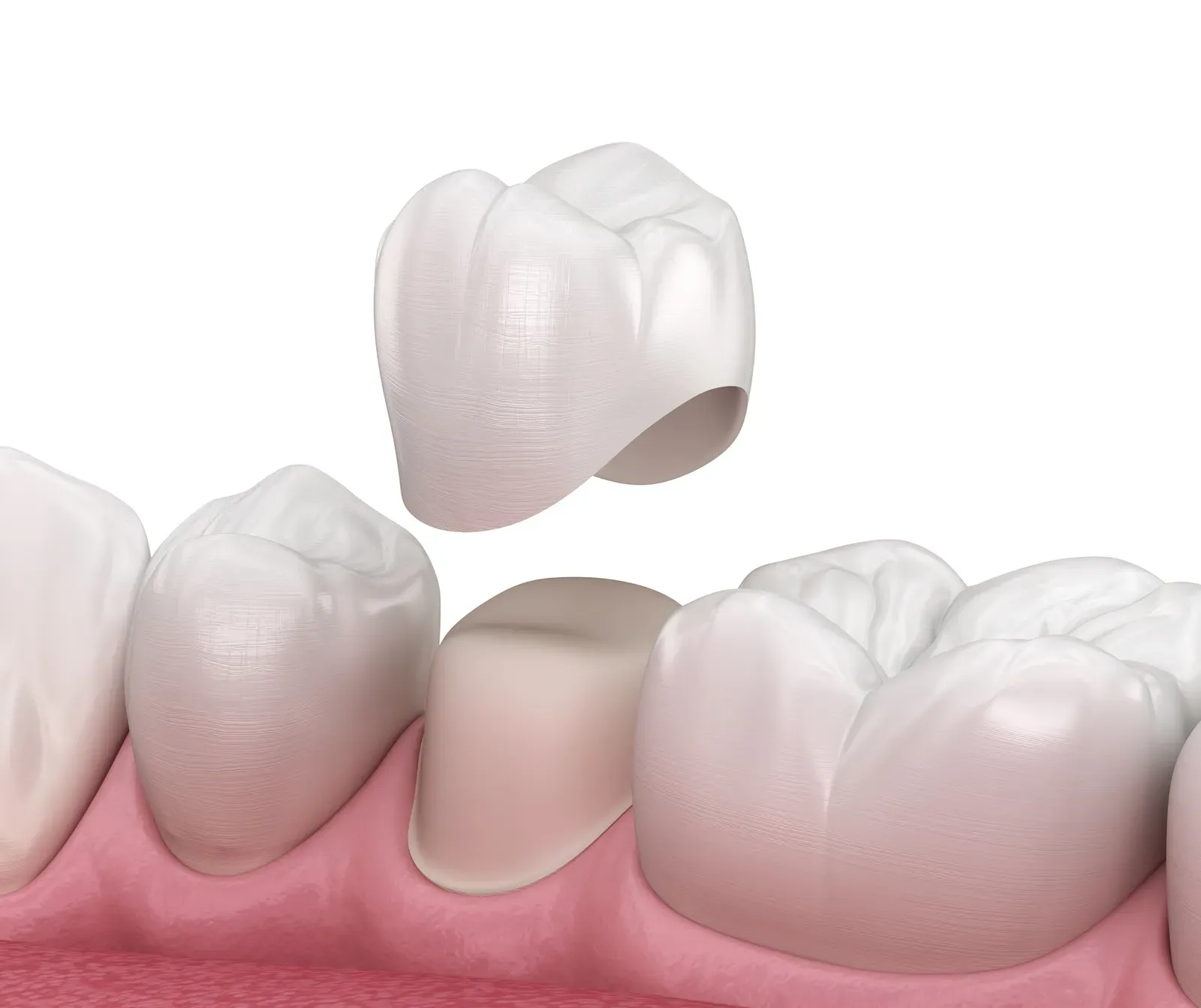
A dental crown is essentially a custom-made cap that covers the entire visible portion of a tooth, restoring its shape, strength, and function. Crowns are typically recommended for teeth with large cavities, cracks that extend below the gumline, significant wear, or teeth that have undergone root canal treatment and need protection from fracturing.
The process usually takes two visits. At the first, we prepare the tooth by removing damaged structure and shaping it to receive the crown, then take a precise impression or digital scan and fit you with a temporary crown to protect the tooth in the meantime. Your permanent crown - crafted from materials like porcelain, zirconia, or a porcelain-fused-to-metal blend depending on the tooth's location and your preferences - is then custom-made to match your bite and the color of your surrounding teeth.
At your second visit, we remove the temporary, check the fit and color of the permanent crown, make any small adjustments, and cement it permanently in place. Some dental offices offer same-day crowns milled in-house, which can shorten this to a single visit - we're happy to talk through which option fits your schedule and your tooth's specific needs during your consultation.
How Long Does Each Restoration Really Last?
Longevity is often the question underneath the question - patients want to know whether they're buying a quick fix or a lasting solution. Composite fillings typically last between 7 and 10 years with good oral hygiene, though this depends heavily on the size of the filling and how much chewing force the tooth experiences. A small filling on a back molar used for heavy chewing may wear faster than a similar-sized filling on a front tooth.
Crowns tend to last longer, often 10 to 15 years, and many last two decades or more with proper care. That extended lifespan comes from the fact that a crown covers and protects the entire tooth rather than just filling a cavity, distributing bite force more evenly and shielding the remaining natural structure from further cracking or decay.
Neither restoration is permanent, though. Grinding your teeth at night, chewing ice, biting fingernails, or skipping regular dental checkups can all shorten the life of either repair significantly. That's part of why we always check existing fillings and crowns during your routine visits - catching a small crack or a loosening edge early usually means a simple fix instead of a bigger, more expensive problem later.
Warning Signs You Shouldn't Wait On
Tooth problems rarely announce themselves loudly at first. A cavity can grow for months without causing noticeable pain, and a cracked tooth might only bother you when you bite down a certain way. Recognizing the early signals can mean the difference between needing a straightforward filling and needing a crown - or worse, a root canal.
Pay attention to sensitivity that lingers after eating something hot or cold, a sharp pain when biting down on a specific spot, visible dark spots or rough patches on a tooth's surface, or a feeling that something "sharp" or "off" has developed where a filling used to be smooth. Any of these are worth a phone call rather than a wait-and-see approach, since restorative dentistry is almost always easier, faster, and less costly the earlier it's addressed.
Caring for Your Restoration Long-Term
Whether you leave our office with a new filling or a new crown, the daily habits that protect your natural teeth also protect your restoration. Brushing twice a day, flossing once daily, and keeping up with routine cleanings all help prevent new decay from forming at the edges of an existing repair - which is actually one of the more common reasons restorations eventually fail.
If you grind or clench your teeth, especially at night, ask us about a custom nightguard. Grinding puts tremendous pressure on both natural teeth and restorations, and it's one of the fastest ways to crack a filling or loosen a crown well before its expected lifespan is up. Avoiding habits like chewing ice, using your teeth to open packaging, or biting down on very hard foods will also go a long way toward protecting whatever restoration you have.
We check every existing filling and crown at your regular cleanings as part of your exam, looking for small chips, wear, or gaps at the margins that can let bacteria in. Catching these early is almost always a quick, simple adjustment rather than a full redo.
Key Takeaways
- Fillings suit smaller cavities with enough healthy tooth structure remaining to support them.
- Crowns protect teeth with extensive decay, large cracks, or teeth weakened by root canal treatment.
- Fillings typically last 7-10 years; crowns often last 10-15 years or longer with good care.
- Lingering sensitivity or sharp pain when biting down should be checked right away, not watched.
- Routine checkups catch small issues in existing restorations before they turn into bigger repairs.
Frequently Asked Questions
Does getting a crown hurt more than getting a filling?
Both procedures are done under local anesthesia, so neither should be painful during treatment. Some mild soreness or sensitivity for a day or two afterward is normal with either option, and it typically resolves on its own without any special care.
Can a filling be replaced with a crown later if needed?
Yes, this is actually fairly common. If a filled tooth develops a new crack, a larger cavity, or simply wears down over time, we can remove the old filling and place a crown to provide stronger, longer-lasting protection.
Will my insurance cover a filling or crown?
Most dental insurance plans cover a portion of both procedures when they're medically necessary, though coverage percentages vary by plan. Our team verifies your benefits before treatment and walks you through the expected cost so there are no surprises.
How do I know if my old filling needs to be replaced?
Signs include visible cracks, discoloration around the edges, a rough or sharp feeling where it used to be smooth, or new sensitivity in that tooth. We check all existing fillings at your regular visits, but any of these symptoms between appointments are worth a call.
Is it ever okay to skip treatment on a small cavity?
Cavities don't heal or stay the same size on their own - they progress. A cavity that could be treated today with a simple filling can grow into one that needs a crown, or eventually a root canal, if it's left untreated for too long.
Protecting Your Smile, One Tooth at a Time
Choosing between a filling and a crown isn't about picking the "bigger" or "better" treatment - it's about matching the right repair to the actual condition of your tooth. Fillings handle the majority of cavities with minimal intervention, while crowns step in when a tooth needs more substantial support to keep doing its job for years to come.
At Sahara Family Dental, we take the time during every exam to explain what we're seeing on your X-rays and why we're recommending a particular path forward, so you leave understanding your own oral health rather than just following instructions. If you've noticed a sensitive tooth, an old filling that doesn't feel right anymore, or you're simply due for a checkup, our Montebello team is ready to take a look and help you decide on the restoration that will serve you best.