433 N 4th St #210, Montebello, CA 90640, United States
 (323) 888-1030



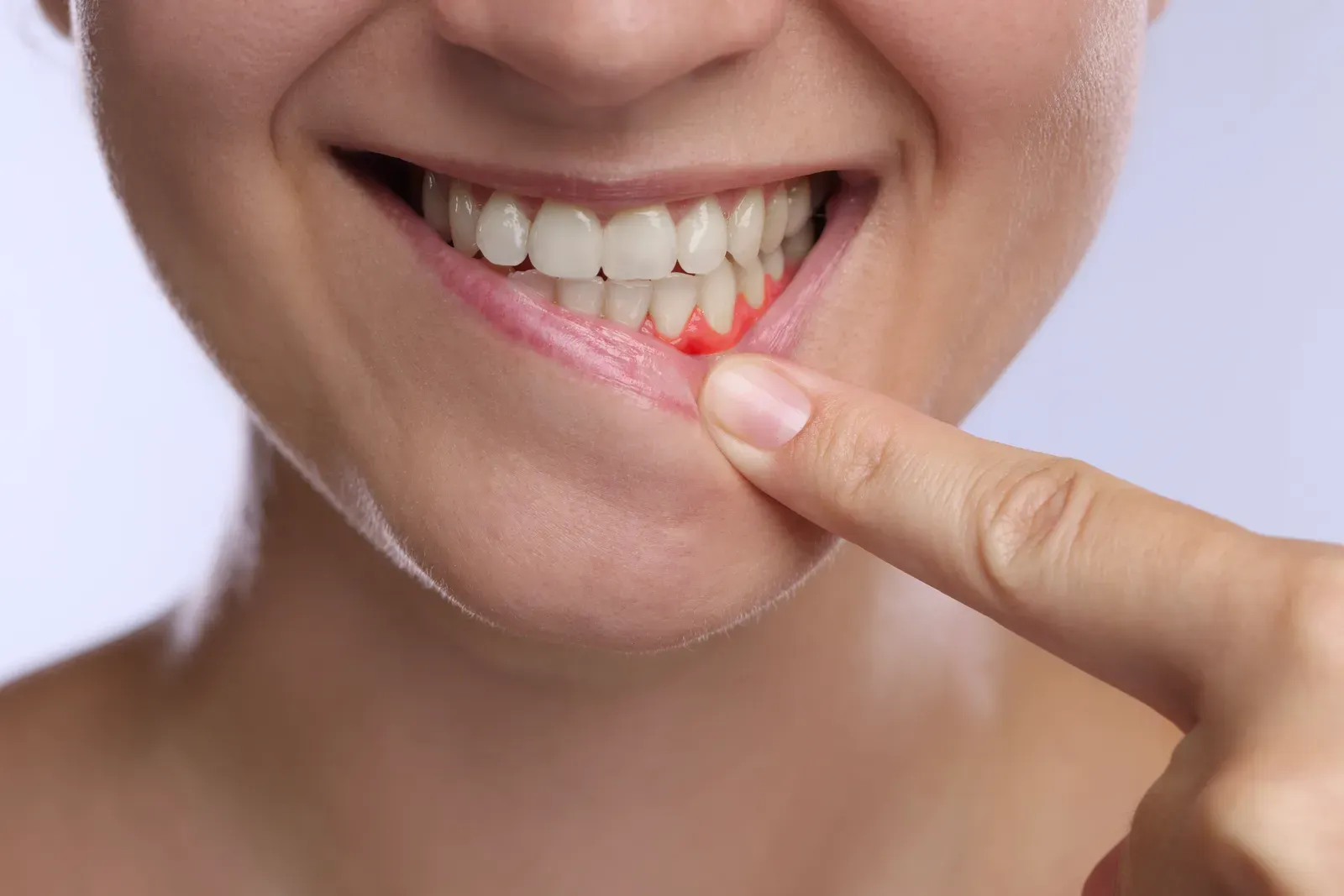
Most people brush off bleeding gums as something that happens when you floss "too hard" or forget to for a week. In reality, bleeding is one of the clearest signals your body sends that something is wrong beneath the gumline. Gum disease, also called periodontal disease, is one of the most common chronic conditions in American adults, and it rarely announces itself with pain until it has already caused real damage.
At Sahara Family Dental, we see patients at every stage of this condition - from mild inflammation that reverses with a professional cleaning to advanced cases where bone loss has already loosened teeth. The difference between those two outcomes almost always comes down to how early the problem was caught and treated. That's the purpose of this guide: to help you recognize the signs, understand what's actually happening in your mouth, and know what treatment options look like at each stage.
Whether you've just noticed pink in the sink after brushing or you've been told by a previous dentist that you have "some gum recession," this article will walk you through what periodontal disease really is, how it progresses, and what you can expect from treatment at our Montebello office.
What Periodontal Disease Actually Is
Periodontal disease is a bacterial infection of the tissues that support your teeth - your gums, the periodontal ligament, and the bone underneath. It starts with plaque, the sticky film of bacteria that forms on teeth every day. When plaque isn't removed thoroughly through brushing and flossing, it hardens into tartar, or calculus, within as little as 24 to 72 hours. Tartar can't be brushed away; it has to be removed with professional instruments.
Once tartar builds up along and below the gumline, it creates an environment where bacteria thrive. Your immune system responds to that bacterial presence with inflammation, which is what causes the redness, swelling, and bleeding associated with gingivitis - the earliest stage of gum disease. Left untreated, that inflammation doesn't stay contained to soft tissue. It spreads to the bone that anchors your teeth, and bone, unlike gum tissue, does not grow back on its own.
This is why periodontal disease is often described as a "silent" condition. The bone loss that defines its more serious stages doesn't typically cause pain until teeth have already started to loosen. That's exactly why routine periodontal screenings - measuring gum pocket depth and checking for bleeding - are part of every standard dental checkup at our office, even if nothing feels wrong to you.
Early Warning Signs Most People Miss
Because gum disease rarely hurts in its early stages, most patients discover it during a routine exam rather than because they noticed a problem themselves. Still, there are signals your body gives off that are worth paying attention to, even if they seem minor.
- Bleeding when you brush or floss: Healthy gums don't bleed from normal hygiene. Even occasional bleeding is a sign of inflammation that shouldn't be ignored.
- Persistent bad breath: Bacteria producing volatile sulfur compounds beneath the gumline create an odor that mouthwash only masks temporarily.
- Gums that look like they're pulling back: If teeth appear longer than they used to, or you notice more of the root surface, recession has likely already started.
- Teeth that feel slightly loose or shift position: This usually signals bone support has already been compromised and treatment should not be delayed.
- New sensitivity to hot or cold: Exposed root surfaces from gum recession are far more sensitive than enamel-covered crowns.
If you recognize even one of these signs, it's worth scheduling an exam rather than waiting for your next regular cleaning. Gum disease treated at the gingivitis stage is fully reversible with professional cleaning and better home care. Once bone loss begins, the goal shifts from reversal to management and stabilization.
How Gum Disease Progresses Over Time
Periodontal disease doesn't move from healthy gums to tooth loss overnight. It moves through fairly predictable stages, and understanding where you fall on that spectrum helps explain why your treatment plan looks the way it does.
Gingivitis: The Reversible Stage
Gingivitis is inflammation confined to the gum tissue, without any bone involvement yet. Gums may be red, puffy, and prone to bleeding, but the fibers and bone anchoring your teeth remain intact. A professional cleaning combined with improved brushing and flossing at home can resolve gingivitis completely within a few weeks.
Early to Moderate Periodontitis
Once inflammation spreads to the supporting bone, the condition is classified as periodontitis. Pockets form between the tooth and gum as attachment is lost, and these pockets trap more bacteria, creating a cycle that accelerates damage. At this stage, a standard cleaning is no longer enough - the infection sits below the gumline, out of reach of a toothbrush or routine prophylaxis.
Advanced Periodontitis
In advanced stages, significant bone loss leads to loose teeth, shifting bite patterns, and sometimes visible gum recession or pus around the gumline. Teeth can become mobile enough that they feel different when you bite down, and in some cases tooth loss becomes unavoidable without more intensive intervention. This is the stage where close coordination between our team and, when needed, a periodontal specialist, matters most.
Treatment Options, From Deep Cleaning to Surgery
Treatment for periodontal disease is tailored to how far the condition has progressed. There's no single fix that applies to every patient, which is why an accurate diagnosis - including pocket depth measurements and, when appropriate, digital X-rays to evaluate bone levels - comes before any recommendation we make.
For gingivitis, a standard professional cleaning paired with a renewed home care routine is often sufficient. For periodontitis, the most common first-line treatment is scaling and root planing, sometimes called a deep cleaning. This two-part procedure removes plaque and tartar from below the gumline (scaling) and smooths the root surfaces (planing) so gums can reattach more easily and bacteria have a harder time recolonizing.
For patients with deeper pockets or more advanced bone loss, additional steps may be recommended, including localized antibiotic therapy placed directly in the pocket, or referral for surgical procedures like flap surgery or bone grafting when a specialist's involvement gives you the best long-term outcome. Our role is to catch disease as early as possible so that more conservative treatment remains an option, and to monitor you closely afterward so any recurrence is caught before it becomes serious again.
- Scaling and root planing: Removes bacteria and tartar below the gumline and smooths root surfaces to encourage reattachment.
- Localized antibiotic therapy: Placed directly into deep pockets to reduce bacterial load where a toothbrush can't reach.
- Periodontal maintenance cleanings: More frequent recall visits, typically every three to four months, to keep pocket depths stable.
- Specialist referral when needed: For advanced bone loss, coordinated care with a periodontist can preserve teeth that would otherwise be at risk.
Risk Factors That Raise Your Chances
While inconsistent brushing and flossing are the most direct cause of gum disease, they're far from the only factor. Genetics play a real role - some people are simply more prone to inflammation and bone loss even with reasonably good hygiene habits. If a parent or sibling has lost teeth to gum disease, it's worth mentioning that history at your next visit.
Smoking and vaping are among the strongest risk multipliers we see clinically. Nicotine restricts blood flow to the gums, which masks bleeding (one of the earliest warning signs) and slows healing after treatment, meaning smokers often have more advanced disease by the time it's caught. Uncontrolled diabetes works in a similar way, impairing the body's ability to fight the bacterial infection and heal damaged tissue, which is part of why we often coordinate care with a patient's physician when blood sugar control is a factor.
Hormonal changes during pregnancy, certain medications that cause dry mouth, and even the normal effects of aging can all increase susceptibility. None of these factors make gum disease inevitable, but they do mean some patients need closer monitoring and more frequent cleanings than others, which is something we build into your individual recall schedule.
Protecting Your Gums Between Visits
Professional treatment resolves active infection, but what you do at home between visits determines whether it stays resolved. Brushing twice a day for two full minutes with a soft-bristled brush, angled slightly toward the gumline, removes far more plaque than a quick thirty-second pass. Flossing once daily disrupts bacterial colonies in the spaces a toothbrush physically cannot reach, which is exactly where gum disease most often begins.
For patients who've already been treated for periodontitis, we frequently recommend an antimicrobial mouth rinse and, in some cases, a water flosser, which can be gentler and more effective around areas of recession or sensitivity. These additions aren't meant to replace brushing and flossing - they work alongside them to reduce the bacterial load that causes inflammation in the first place.
Keeping your regular cleaning schedule matters just as much as home care. If you've been treated for gum disease, that schedule is often more frequent than the standard twice-a-year visit, because periodontal maintenance cleanings reach below the gumline in ways a routine cleaning doesn't. Skipping or delaying these appointments is one of the most common reasons we see disease return after it was previously brought under control.
Key Takeaways
- Bleeding gums are never normal and are often the earliest, most reliable sign of gum disease.
- Gingivitis is fully reversible with a professional cleaning and better home care; periodontitis is not, but it can be stabilized.
- Scaling and root planing is the standard treatment once bacteria and tartar reach below the gumline.
- Smoking, diabetes, and genetics significantly raise your risk, regardless of your hygiene habits.
- Consistent periodontal maintenance visits are the strongest predictor of keeping treated gum disease from coming back.
Frequently Asked Questions
Can gum disease be cured completely?
Gingivitis can be fully reversed with professional treatment and good home care. Periodontitis, once bone loss has occurred, cannot be reversed, but it can be effectively managed and stabilized so it does not progress further with consistent treatment and maintenance visits.
Does a deep cleaning hurt?
We use local anesthetic to numb the treatment area before scaling and root planing, so the procedure itself is not painful. Some mild soreness or sensitivity for a day or two afterward is normal and typically manageable with over-the-counter pain relief.
How often should I get a cleaning if I've had gum disease?
Most patients treated for periodontitis move to periodontal maintenance cleanings every three to four months, rather than the standard six-month interval. This more frequent schedule allows us to keep bacteria levels low and catch any early signs of recurrence quickly.
Is gum recession permanent?
Yes, gum tissue that has receded does not grow back on its own. However, treating the underlying infection stops recession from worsening, and in cases with significant recession, grafting procedures performed by a periodontist can restore gum coverage over exposed roots.
Can gum disease affect my overall health?
Research has linked chronic gum inflammation to increased risks for conditions like heart disease, stroke, and complications with diabetes. The bacteria and inflammatory markers associated with periodontal disease can enter the bloodstream, which is one more reason to treat it as a whole-body health issue, not just a dental one.
Taking the Next Step Toward Healthier Gums
Gum disease is common, but it is not something to leave unaddressed. The earlier it's caught, the simpler and more conservative the treatment, and the more likely you are to keep every natural tooth you have for the long term. If you've noticed bleeding, recession, sensitivity, or any of the other signs we've covered here, that's reason enough to get a periodontal evaluation rather than waiting for your next regularly scheduled cleaning.
Our team at Sahara Family Dental measures gum health at every routine visit precisely because so much of this condition develops without obvious pain. Whether you need a standard cleaning, scaling and root planing, or coordinated specialist care for more advanced disease, we'll walk you through exactly what we find and what treatment makes sense for your specific situation.